
The Research Team
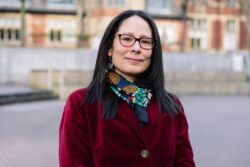
Dr Sahla Aroussi
Dr Sahla Aroussi: Project Lead
Dr. Aroussi Sahla is an Associate Professor of Gender and Global Security Challenges at the School of Politics and International Studies at the University of Leeds. Dr Aroussi is a trailblazing feminist researcher specializing in gender, violence, and international security. Their innovative work spans violence against women in conflicts, the UN's 'Women, Peace, and Security' framework, transitional justice, and women's roles in peacebuilding. Emphasizing gender norms and dynamics, Dr. Aroussi's interdisciplinary approach is driven by a commitment to real-world impact. Passionate about participatory and art-based methodologies, Dr. Aroussi explores and experiments with novel methods. Their acclaimed monograph, Women, Peace, and Security: Repositioning Gender in Peace Agreements (2015), evaluates global gender negotiations in peace settlements. They have led significant studies on transitional justice and violence against women, including research with wartime rape survivors in the Democratic Republic of Congo. Their work addresses justice for sexual violence survivors in conflict contexts and critically engages with gender and violent extremism from a feminist perspective.
Beyond academia, Dr. Aroussi has consulted for UN bodies and international organizations. In 2021, they provided strategic guidance for UN Women on Women, Peace, and Security and Transitional Justice in the Middle East and North Africa. From 2019-2020, they led a UN ESCWA project on women in the judiciary in Arab states, offering a regional overview, identifying barriers, and presenting evidence-based policy recommendations to enhance women's representation in the judiciary.
Dr. Aroussi's work is characterized by innovation, interdisciplinary approaches, and a steadfast commitment to achieving tangible impact. Their dedication to exploring and experimenting with novel methods and approaches sets them apart as a leader in their field. Through their extensive research and consultancy, Dr. Aroussi continues to make significant contributions to the advancement of gender equality and the empowerment of women globally.

Dr David Duriesmith
Dr David Duriesmith: Project Co- Lead
Dr. Duriesmith is a Senior Lecturer in Gender and Politics at the University of Sheffield's Department of Politics and International Relations. Prior to this he held posts at the University of Queensland and the University of Melbourne. He earned a Bachelor of Arts in 2009, and a Ph.D. in International Studies in 2014 from the University of Melbourne.
Dr. Duriesmith's research focuses on the intersections of masculinities, conflict, and violence prevention. He has published on preventing violence after war, men’s support for gender equality, foreign fighter networks, the transformation of war and feminist international relations theory. Publications include the Masculinity and New War: The Gendered Dynamics of Contemporary Armed Conflict, and "Engaging or Changing Men? Understandings of Masculinity and Change in the New 'Men, Peace and Security' Agenda" , “Returning to the root: Radical feminist thought and feminist theories of International Relations”, and “Militarized masculinities beyond methodological nationalism: charting the multiple masculinities of an Indonesian jihadi.”
At the University of Sheffield, Dr. Duriesmith teaches courses related to gender and feminist perspectives on politics. He convenes modules including Gender and the World, Oppression and Resistance, and Feminist and Decolonizing Approaches to International Relations.
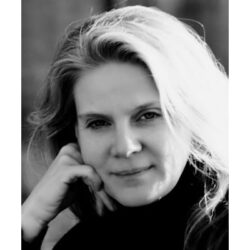
Professor Jill Hanass-Hancock
Professor Jill Hanass-Hancock: Project co-lead
Jill Hanass-Hancock is a Chief Specialist Scientist at the South African Medical Research Council (SAMRC). She holds a PhD in Disability Studies and Rehabilitation Science from Humboldt University in Berlin. Jill began her career as a special educator and educational psychologist, gaining 10 years of experience working with young people with disabilities in schools and the NGO sector. She has dedicated her career to disability and sexual and reproductive health and rights (SRHR) research, leading significant projects like the Disability Data Initiative SubSahran Africa, the Disability Access and the Breaking the Silence Intervention. Jill is also an honorary professor at the UKZN School of Health Science and an NRF C1 rated scientist. Jill’s research focuses on the SRHR and people with disabilities using a variety of research approaches including ethnography, epidemiology, situation and policy analysis techniques and evaluations. She has led a number of milestone disability research projects in Africa, among them the Elements of the Financial and Economic Costs of Disability, which was among the 12 best of UNICEF 2016 research projects and influenced the South African White Paper on the Rights of Persons with Disabilities and which research methods are now applied in other countries. Jill was the principal investigator and co-author of the Breaking the Silence Intervention a project which focuses on access to SRHR for people with disabilities and includes an evidence-informed curriculum innovation approach to enable educators to provide Comprehensive Sexuality Education in accessible formats. She is also known for her work to increase the participation of women with disabilities in GBV programmes (ALIGHT) and her development of disability policy audits in the space of SRHR and HIV programming in Africa.
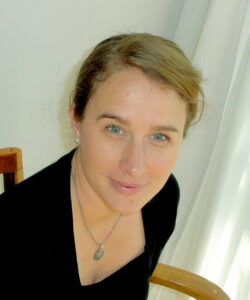
Dr Elisabet Le Roux
Dr Elisabet le Roux: Project Co-Lead
Dr Elisabet le Roux is Research Director of the Unit for Religion and Development Research at Stellenbosch University, South Africa. To date, she has delivered a range of evaluation and formative research projects in 24 countries across four continents, with a particular focus on violence against women and girls, gender equality, intersectionality, women’s participation, disabilities, and a critical lens on the important roles of religion and culture. She has done this research with and for intergovernmental agencies, government departments, development networks, faith-based organisations, non-governmental organisations, and research networks. She has significant experience in managing consortium-led projects which have a sector-wide learning agenda, and the majority of her research to date has been done in conflict-affected communities. Elisabet has a proven track record in mixed methodology research, including a series of longer-term, multi-country evaluations and studies. More recently, she has been prioritising the development and use of innovative, creative, participatory and feminist research methods, and she is increasingly assisting development organisations in developing their overarching strategic approaches to religion, culture and violence against women and girls.
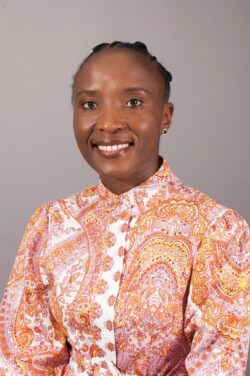
Dr Pinky Mahlangu
Dr Pinky Mahlangu
Pinky Mahlangu is the Deputy Director and Senior Specialist Scientist in the Gender and Health Research Unit of the South African Medical Research Council. She holds an affiliation appointment as an extraordinary lecturer at the School of Health Systems and Public Health, University of Pretoria, and senior lecturer at the School of Nursing and Public Health, University of KwaZulu-Natal. She has 13 years of research experience on gender-based violence prevention, social determinants of HIV and mental health focused on adolescents and young women, including gender-diverse and women with disabilities. Her research involves the use of qualitative and quantitative methods, and co-development and evaluation of evidence-based interventions. She has developed and tested interventions to address sexual violence and mental health in the community, in schools and in university and college campuses. She has published in high impact journals and translates her research on various platforms aimed at informing policy and practise.
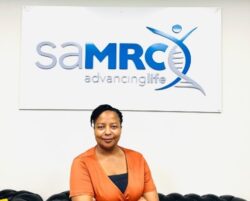
Thakasile Ndlovu
Thakasile Ndlovu: Project Coordinator
Thakasile Ndlovu is a Project Coordinator at the South African Medical Research Council (SAMRC), within the Gender and Health Research Unit, with over 10 years of experience in public health research. She holds a master’s degree in public health and is soon to begin her PhD studies. Thakasile’s research interests focus on gender, gender-based violence (GBV), and disability, and she has made significant contributions to the development of interventions aimed at improving health outcomes for vulnerable populations, including people with disabilities, women, and survivors of GBV. Thakasile has a proven track record in coordinating and managing complex research projects that focus on gender-based violence, sexual and reproductive health, and the accessibility of health services for marginalized communities. One of her recent initiatives includes the implementation of a quality assurance tool for GBV services and the creation of a disability accessibility checklist to improve healthcare delivery for people with disabilities.
As part of her work at SAMRC, Thakasile has been involved in key research that aims to understand HIV-risk factors among vulnerable populations in the greater eThekwini area of KwaZulu-Natal. Her team has investigated both biological and social determinants of HIV infections, identifying HIV-incidence hotspots and critical factors influencing the uptake of prevention methods, particularly among women and girls. This research has provided invaluable insights into the contextual drivers of HIV vulnerability, from the perspectives of local communities and key stakeholders, including nurses, traditional healers, and social workers. Thakasile’s dedication to public health and community-driven research has positioned her as a leading figure in the field, continuously striving to improve health outcomes through participatory research and evidence-based interventions.

Nolufefe Zukulu
Nolufefe Zukulu: Project Technologist
Nolufefe Zukulu, is a research assistant at the South African Medical Research (SAMRC), Gender and Health Research Unit (GHRU). She holds a Bachelor of Social Science degree with majors in Psychology and Criminology and has experience in disability and gender-based violence (GBV) research. She is also a Black woman with a disability, using crutches for mobility.
Within the last 2 years, her work has focused on disability research, particularly disability data and advocacy. She has contributed to projects that advocate for the inclusion and rights of people with disabilities at the South African National AIDS Council level. She is actively involved in the Disability Data Initiative (DDI), where they catalogue and analyze national household and census data to monitor disability rights in alignment with the Convention on the Rights of Persons with Disabilities (CRPD) and the Sustainable Development Goals (SDGs). She has also worked on research focusing on access to health and post-GBV clinical services for people with disabilities. For instance, she supported the Disability Awareness Checklist (DAC), a tool designed to assess facility preparedness to cater for people with disabilities and identify gaps in and solutions for disability-inclusive service delivery in African settings.
Her background in psychology and criminology, combined with her hands-on experience in disability research and advocacy, drives her commitment to fostering inclusive practices that improve accessibility and service provision for people with disabilities.

Siqiniseko Lindokuhle Mhlongo
Siqiniseko Lindokuhle Mhlongo: Project Technologist
Siqiniseko Lindokuhle Mhlongo is a passionate educator, advocate, and activist dedicated to advancing the rights and inclusion of individuals with albinism. Born with albinism, he has turned personal challenges into a powerful mission to promote social justice, inclusivity, and equal educational opportunities. His academic background includes a Bachelor of Education (B.Ed.) degree, specializing in Senior and FET Phase education, as well as an Honors degree in Educational Psychology from the University of KwaZulu-Natal, where he focused on inclusive education, human development, and social justice.
Professionally, Siqiniseko has gained valuable experience in both research and leadership roles. From 2023 to 2025, he interned at the South African Medical Research Council's Gender and Health Research Unit, contributing to research on disability and sexual reproductive health and rights. In 2025, he transitioned into the role of Research Assistant/Technologist at SAMRC. He has also held various leadership positions, including serving as Secretary of the Differently Abled Students Association (DASA) at UKZN, where he worked to promote disability inclusion across the university's five campuses.
Beyond his professional and academic pursuits, Siqiniseko is deeply committed to community engagement and activism. He currently serves as Secretary of the Thembisile Madlala Albinism Foundation, where he advocates for the rights of individuals with albinism through public speaking and grassroots outreach. Driven by a vision of a more inclusive and compassionate society, his work continues to challenge stereotypes and inspire others, showcasing the transformative power of resilience, leadership, and lived experience.